How AI Website Upgrades Can Support Better Conversions
Most businesses think about a website redesign as a design decision. Make it look better. Feel more current. Work on mobile. Those are real goals and they matter. But from a conversion standpoint – the question of whether visitors actually contact you, book a call, or submit an inquiry – a redesign is really about removing the obstacles that stand between someone arriving on a page and taking the action you want them to take.
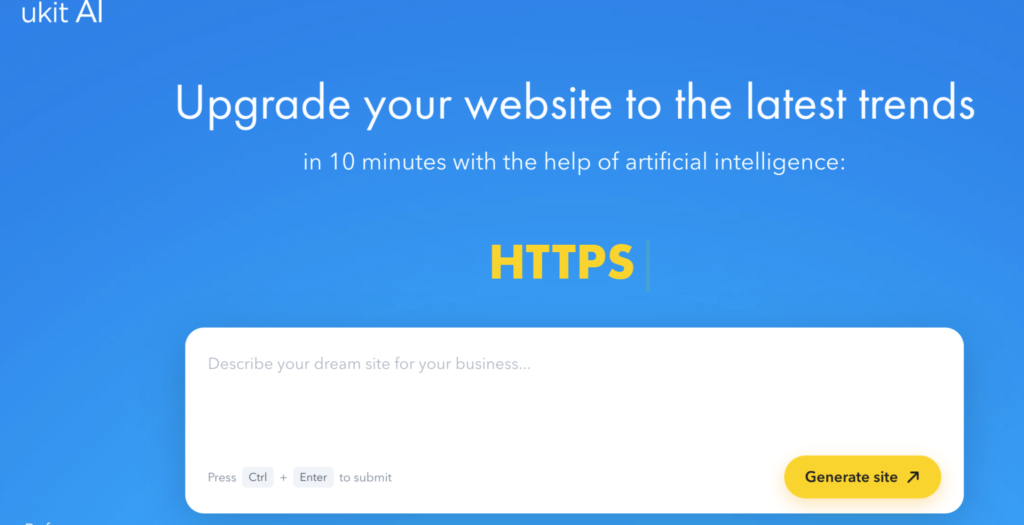
AI-powered redesign tools like uKit AI tackle a specific set of those obstacles. The tool takes a URL to an existing site, analyzes its structure and content, and generates a modernized version in around ten minutes – mobile-responsive layout, HTTPS, updated visual conventions, cleaner code. What it addresses and what it does not is worth being precise about, because conflating the two leads to launching a better-looking site that still underperforms.
The Conversion Problems an AI Upgrade Solves
Mobile friction. This is the largest single category of conversion loss on outdated sites. If a visitor opens your site on a phone and the layout does not adapt – text is small, buttons are hard to tap, the contact form overflows the screen – they leave. Not because your offer is wrong, but because the experience created enough friction that leaving was easier than continuing.
Mobile abandonment rates on non-responsive sites are consistently higher than on responsive ones. An AI upgrade addresses this entirely. The new layout adapts to any screen size automatically, which removes a category of conversion loss that has nothing to do with your offer, your copy, or your positioning.
Trust signals from technical quality. HTTPS, fast loading, and clean markup are not exciting topics, but they factor into conversion in measurable ways. Browsers actively flag non-HTTPS sites as “not secure,” which is not a subtle signal for visitors who are about to submit their contact information. An AI upgrade applies HTTPS as a standard part of the rebuild, along with code cleanup that typically improves loading speed.
Navigation clarity. Outdated sites often have navigation structures that made sense when the site was built but create unnecessary steps for first-time visitors. AI redesign tools restructure navigation into more current patterns – fewer levels, more obvious labels, mobile-friendly menus – which reduces the number of visitors who give up before finding what they came for.
First impression. Before a visitor reads a single word on a page, they have already formed an opinion about the site’s credibility based on its visual presentation. A site that looks dated communicates, however unfairly, that the business may be similarly outdated. A modern-looking site starts the credibility conversation from a better position.
The Conversion Problems an AI Upgrade Does Not Solve
Weak or generic copy. If a visitor cannot immediately understand what the business does, who it is for, and why they should choose it over alternatives, the conversion rate stays low regardless of how clean the layout is. AI upgrade tools carry existing content into the new design without rewriting it. If the current copy is vague – “professional services tailored to your needs,” “trusted by clients across industries” – the redesigned site is a better-looking version of the same problem.
This is worth taking seriously before publishing an AI-generated upgrade. The gap between “what this business actually offers” and “what the site says it offers” is often larger than it appears when you are close to the business. Before a well-designed page makes that gap look more polished and professional, it is worth auditing every section for specificity.
Missing social proof. Testimonials, case studies, results with numbers, and client logos are consistently among the highest-impact conversion elements on small business sites. If they were not on the original site, they will not appear in the AI-generated version. The upgrade makes the page look credible. The business has to supply the evidence that actually earns credibility.
Unclear calls to action. The AI improves visual structure but does not make strategic decisions about which action to prioritize on each page or how to phrase that action for a specific audience. “Contact Us” converts differently than “Get a Free Quote” or “Schedule a 20-Minute Call.” The right choice depends on understanding who the visitor is and what they are ready to do at that point in the journey.
Conversion-optimized page structure. Whether a service page should lead with a problem statement or a solution, how far down to place pricing, whether a FAQ should appear before or after the main call to action – these decisions affect conversion significantly and require understanding of how this specific audience reads and decides. The AI applies current layout conventions, not conversion strategy tailored to this business.
How to Layer Conversion Strategy on Top of an AI Upgrade
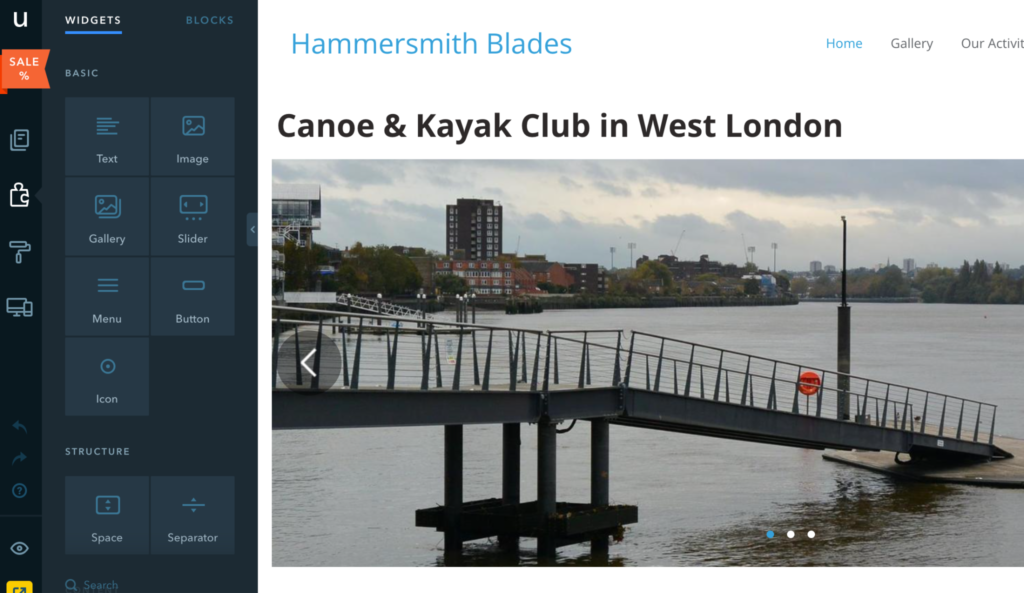
The most effective approach treats the AI-generated upgrade as a technical and visual foundation, then layers conversion-focused improvements on top.
After generating and reviewing the upgrade for accuracy, work through these additions:
Specificity pass on the hero section. The first thing a visitor sees should answer “what is this and why should I care” in one or two sentences. If the current hero is generic, rewrite it before launch. This is the highest-leverage edit on any page.
One visible piece of social proof above the fold. A single client name, a number, a specific result – something that tells a visitor that real people have trusted this business and it worked out. The AI will not add this; you have to supply it.
A specific, visible call to action on every service page. Not just a “Contact” button in the navigation – a contextual CTA positioned where a visitor who has just read about a specific service would naturally be ready to act.
Mobile testing on a real device. The AI-generated layout is responsive, but “responsive” and “fully tested on mobile” are not the same thing. Submit the contact form on your phone. Make sure the phone number is tappable. Verify that the most important information is visible without significant scrolling.
The Role of Audience Research in Conversion
One of the most consistent patterns in conversion work is that copy and structure improve most when they are informed by real audience data – what visitors say they were looking for, what questions they had that the site did not answer, what almost stopped them from contacting the business.
This kind of data is not something an AI redesign tool generates. It has to be collected intentionally. If you have not run structured feedback on what your current site is missing, even a brief survey of recent clients is often more valuable for conversion improvement than any amount of visual polish. The practical guide to How to Create a Survey Research for FREE covers how to do this without needing expensive software – collecting the kind of qualitative data that makes the decisions about copy and CTA placement much less guesswork.
Where Interactive Page Elements Fit
An upgraded site that loads fast, works on mobile, and looks current is a better conversion environment than an outdated one. But the gap between “better environment” and “site that actively converts” often comes down to what happens between a visitor arriving and them taking action.
One of the most effective conversion tools on a business website is an interactive element that helps the visitor figure out what they need – a pricing calculator, a project scope estimator, a simple quiz that maps their situation to a service. These reduce friction at the decision stage, not just the arrival stage. The analysis in Interactive Calculators for Marketing Funnels covers how these tools affect the conversion stages that come after a visitor decides the site looks credible – which is exactly where the AI upgrade leaves off.
Summary
AI-powered website upgrades like uKit AI solve a specific and real set of conversion problems: mobile friction, technical trust signals, navigation clarity, and first impression. They do not solve the message-level problems that ultimately determine whether a site converts well: weak copy, missing social proof, unclear calls to action, and structure that does not reflect how the target audience actually makes decisions.
The right model is to treat an AI upgrade as a technical baseline – the foundation from which conversion-focused improvements can be built – rather than as a complete conversion solution. The visual and technical problems get addressed quickly and reliably. The strategic work, which requires understanding the audience and the offer, follows from there.